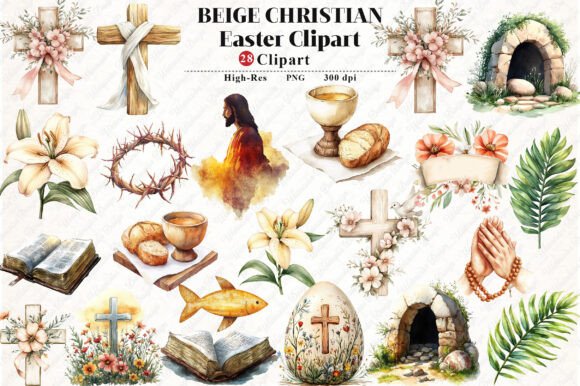
Beige Christian Easter Clipart
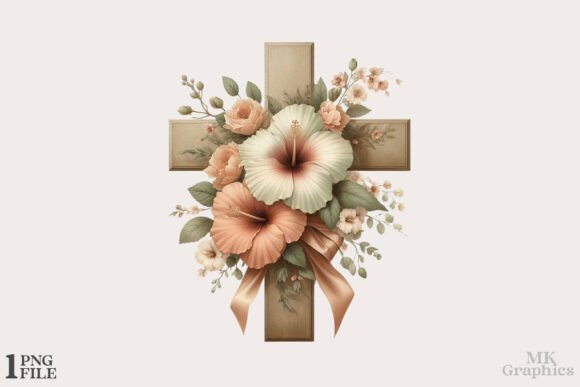
As a designer who’s stitched over 300 client projects—from boutique baby onesies to limited-run church merchandise—I opened Beige Christian Easter Clipart expecting quiet reverence. What I found was something more intentional: a softly grounded, unhurried visual language that feels like linen, not lace. This isn’t flashy Easter clipart. It’s thoughtful illustration—clean-lined, gently rounded, with breathing room between elements. Think cross and lily, subtle egg motif, maybe a soft ribbon or sprig of olive—arranged with asymmetry that invites the eye without demanding attention.
What It Feels Like on Fabric—Before You Stitch a Single Thread
I pulled up the design on my embroidery software and dropped it onto a mockup of a natural cotton tote bag. Instantly, the beige palette revealed its strength: it doesn’t shout “Easter”—it whispers “sacred season.” That matters. For a small shop owner curating Easter gifts for families who prefer understated faith expression, this is gold. No glitter, no cartoon bunnies, no forced cheer. Just calm symbolism, scaled to sit comfortably on a tea towel, pillow cover, or unisex sweatshirt.
The layout leans into negative space—not emptiness, but invitation. That means it breathes on textured fabrics like terry cloth kitchen towels or looped cotton aprons. It also means stitch density stays moderate. No heavy fill-stitch jungles that could stiffen a baby onesie or distort a lightweight cap. The curves are generous, not fussy—ideal for satin-stitch outlines that hold shape without puckering on stretchy knit blends.
Where It Shines—and Where It Asks for Care
Shines:
- Custom apparel—especially light-to-midweight cotton or linen-blend sweatshirts and tees. The beige tones blend beautifully with oatmeal, cream, and heather grey, letting the design feel like part of the garment, not an afterthought.
- Baby embroidery—on burp cloths, swaddle blankets, or nursery pillows. Its gentle scale and minimal fine detail avoid overwhelming tiny items or risking thread snagging.
- Embroidered patches—cut-and-sew or iron-on. The clean edges and balanced weight make it stable in borderless patch formats, and it reads clearly even at 2.5"–3" width.
- Holiday gifts & boutique branding—think personalized Easter baskets, custom altar linens for small congregations, or seasonal packaging tags for handmade soap or candles. It elevates without alienating.
Use carefully:
- Dark fabric—beige thread will read as tonal, not high-contrast. If visibility is critical (e.g., a black cap for church volunteers), test stitch with ecru or off-white thread—or consider a version recolored digitally before digitizing.
- Thin or slippery fabrics like rayon challis or silk charmeuse—these need extra stabilizer support, especially under satin-stitch curves. The design’s open structure helps, but don’t skip backing.
- Curved surfaces like baseball caps—test hoop placement first. The gentle flow works well, but avoid placing delicate stem details right over the crown seam where distortion happens.
- Frequent-wash items like kitchen towels or children’s clothing—confirm thread colorfastness and use quality polyester or rayon embroidery thread. Beige can shift subtly if low-grade thread fades.
Design Judgment: How It Shapes Your Finished Product
This isn’t just about stitch count—it’s about perception. When your Etsy customer opens a hand-embroidered Beige Christian Easter Clipart tote bag, they’re not just seeing a design. They’re sensing intentionality: the choice of muted tone says “thoughtful,” not “trend-chasing.” That builds trust. For a craft fair shopper comparing ten Easter-themed items, that quiet confidence often tips the scale.
It also supports brand consistency. If your small shop uses earthy, neutral palettes across product photography, packaging, and social posts, this clipart integrates seamlessly—no jarring contrast or visual whiplash. And because it’s categorized under Illustrations, it’s flexible: you can use it as-is for direct embroidery, adapt it into an applique design with felt or linen, or even trace it for hand-embroidery patterns.
Giftability rises, too. A linen pillow cover with this design feels heirloom-adjacent—not disposable holiday decor. Same for a personalized baby blanket: the simplicity reads as tender, not generic. That emotional resonance? That’s what turns a handmade product into a meaningful finished product.
Practical Notes Every Embroidery Designer Should Run Through
Before committing to production—whether for one custom order or a batch of 50—do these six things:
- Test on scrap fabric matching your final substrate—same weave, same stretch, same finish. Watch how satin stitches lay on terry vs. smooth cotton.
- Check thread color contrast on both light and dark backgrounds using printable mockups. Beige-on-cream reads differently than beige-on-charcoal.
- Review stitch density in your embroidery software. Look for tight clusters—especially near curved stems or cross arms—that might benefit from slight digitizing tweaks.
- Confirm hoop size compatibility. Does the design fit cleanly within your most-used hoops? If it’s borderline, consider repositioning or scaling down—not up—to preserve clarity.
- Inspect small details at actual stitch size. Tiny flourishes may vanish on 2" embroidery; simplify or omit if needed for legibility.
- Verify licensing before selling finished items or bundling the file with digital products. Since it’s listed as an illustration—not a machine embroidery design—you’ll likely need to digitize it yourself or source a compatible embroidery file. Don’t assume commercial use is granted.
In short: Beige Christian Easter Clipart earns its place not by being loud or complex, but by being considered. It’s the kind of design that makes your custom apparel feel curated, your baby embroidery feel reverent, and your small shop product feel like it belongs in a slow-living, soul-led marketplace. Use it with care—and it’ll return the favor in quiet impact.