Jesus Walking with Disciples Apostles
A Quiet, Reverent Presence—Not a Busy Graphic
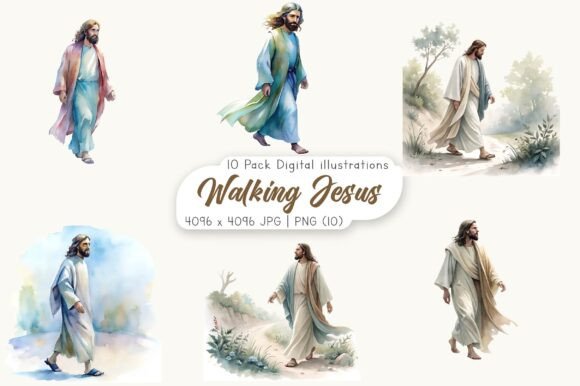
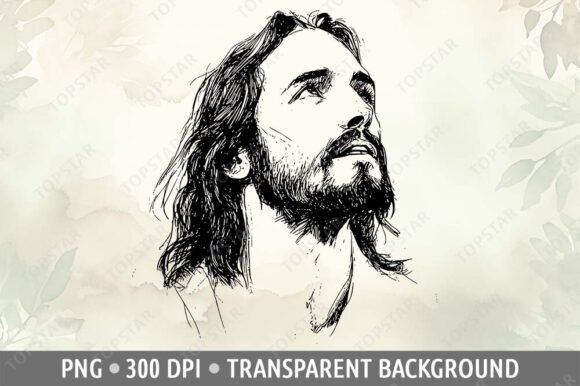
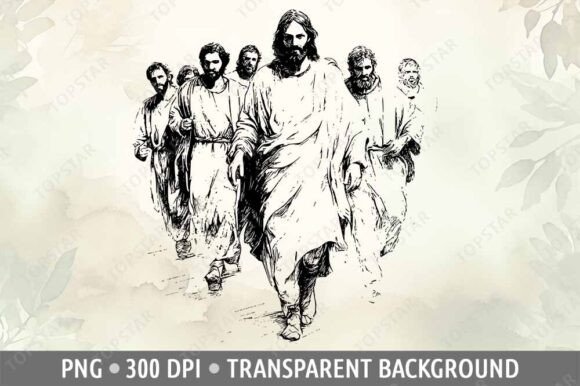
First glance at Jesus Walking with Disciples Apostles tells me this isn’t a bold logo or a playful icon—it’s an illustration rooted in narrative calm. The composition flows left to right, with figures gently spaced, robes softly layered, and postures suggesting movement and conversation rather than static posing. There’s no heavy outlining, no exaggerated facial features, no modern stylization. It feels like a hand-drawn sketch translated thoughtfully into stitch—not rushed, not over-digitized. That matters. For embroidery designers who value intentionality over trend-chasing, this design carries weight without shouting.
Where It Lives Best: Thoughtful Handmade Products
I recently tested Jesus Walking with Disciples Apostles on a natural linen tote bag for a local faith-based boutique. Why that pairing? Because the design’s gentle scale and modest detail level hold up beautifully on medium-weight woven fabric—no bleeding, no thread piling, no lost definition in the folds of the disciples’ garments. It also worked well as a center chest embroidery on a cream cotton sweatshirt for a small church youth group order. The vertical rhythm of the figures aligned naturally with the garment’s structure, and the open spacing between characters gave the stitching room to breathe.
It’s equally strong on baby items—think a soft muslin blanket or a bib—where subtlety reads as tenderness, not vagueness. As a pillow cover motif or kitchen towel design, it adds quiet meaning without overwhelming domestic utility. And for holiday or baptismal gifts? Yes. This isn’t flashy—but it’s remembered. Customers notice sincerity in the line quality, and that translates directly to perceived value in a handmade product.
Where Caution Is Needed: Fabric, Fit, and Function
This is not a one-size-fits-all machine embroidery design. Its strength lies in clarity at moderate scale—not micro-detail. I’d avoid using Jesus Walking with Disciples Apostles on anything under a 4” hoop without first checking how the smaller robes and facial suggestions hold up in stitch. On thin or stretchy fabric (like lightweight knits or baby rib), stabilizer choice becomes critical—medium tear-away works for stable wovens, but you’ll likely need cut-away for anything with give.
Dark fabric demands attention to thread color contrast. The design relies on subtle tonal shifts in robes and landscape cues—not stark silhouettes—so testing in black-and-white mockups is essential before committing to navy or charcoal apparel. Likewise, curved surfaces like caps or apron pockets require careful placement; the horizontal flow of the scene doesn’t wrap well around tight contours. And while it’s not dense, the fill stitch areas in cloaks do build up slightly—so double-check stitch density if layering over textured fabrics like terry cloth or bouclé.
What It Adds—Beyond the Stitch
When customers see Jesus Walking with Disciples Apostles on a finished product, they don’t just see embroidery—they sense care. That impression lifts perceived professionalism, especially for Etsy sellers and small shop owners building trust through consistency. It aligns with brands that prioritize authenticity over novelty: a Catholic gift shop, a Montessori nursery, a pastoral counseling practice offering keepsake blankets. It doesn’t scream “religious”—it invites reflection. That nuance helps avoid alienating buyers who appreciate spiritual resonance without overt proselytizing.
For commercial embroidery projects, it performs cleanly across common workflows: clean satin stitch edges on outer robes, balanced fill stitch in background elements, and running stitch accents that read clearly even after multiple washes (assuming proper stabilizer and thread selection). As a digital embroidery file, it’s versatile—not overly reliant on specialty stitches, so it adapts well whether you’re using mid-range home machines or industrial multi-heads.
Practical Designer Notes Before You Stitch
- Test first—always run Jesus Walking with Disciples Apostles on scrap fabric matching your final substrate, especially for baby items or apparel meant for frequent washing.
- Review thread colors carefully—the mood shifts dramatically with warm vs. cool neutrals. A beige-to-ivory palette reads softer than gray-to-charcoal.
- Confirm hoop size compatibility before digitizing adjustments. If your project requires scaling down significantly, inspect small details like hands and facial hints in the stitch file preview.
- Use printable mockups to assess visual impact on light vs. dark backgrounds—this design gains depth on off-whites but can recede on very pale ecru.
- Stabilizer isn’t optional—especially for applique-style interpretations or layered fabric applications. A lightweight cut-away prevents puckering in the longer robe sections.
- Check licensing before listing finished products or reselling the embroidery file. Since this falls under Illustrations, verify whether commercial use is included—or if separate permissions apply for craft business or Etsy seller contexts.
Final Thought: Meaning That Stitches Well
Jesus Walking with Disciples Apostles won’t dominate a tradeshow booth or trend on TikTok—but it will earn repeat orders from customers who value craftsmanship with quiet conviction. It’s the kind of design that feels intentional in every stitch: balanced, respectful of fabric behavior, and adaptable across real-world uses—from a personalized sweatshirt for a seminary graduate to a delicate tea towel for a new pastor’s kitchen. For embroidery designers who treat each project as both technical execution and emotional offering, this is a reliable, resonant asset—not just another digital embroidery file.