Retro Valentine Love Like Jesus Coquette
A Designer’s First Look: Charm with Quiet Confidence
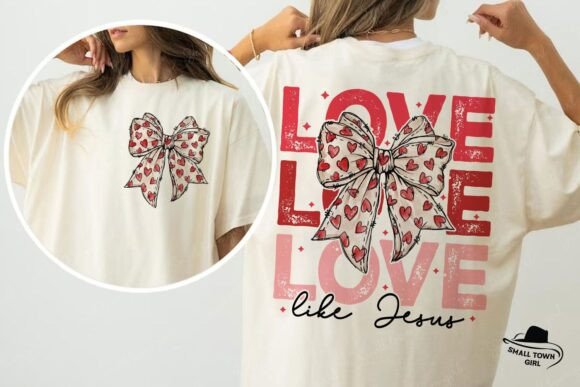
When Retro Valentine Love Like Jesus Coquette landed in my inbox, I paused—not because it screamed for attention, but because it *invited* it. Soft curves, vintage script, and a gentle balance of faith and flirtation give this machine embroidery design an unmistakable mood: tender, intentional, and quietly joyful. It doesn’t lean into kitsch or over-polish; instead, it feels like something you’d stitch onto a linen tea towel for your sister’s baby shower—or embroider on a cream cotton apron for your small-batch bakery’s Valentine pop-up. The layout flows naturally across a medium hoop, with the “Love Like Jesus” phrase arched just enough to echo coquette’s playful elegance, while the heart motif sits grounded but not heavy.
Where It Shines: Real Projects, Real Customers
I tested Retro Valentine Love Like Jesus Coquette on three real-world items: a heavyweight canvas tote bag (for a local boutique’s holiday gift set), a midweight cotton sweatshirt (a custom order from an Etsy seller), and a 100% cotton baby onesie (as a personalized keepsake). On the tote, the design held crispness without stiffness—satin stitches glided smoothly over the tight weave, and the lettering remained legible even at 4.5 inches wide. On the sweatshirt, I used a light cutaway stabilizer and medium-weight tear-away on top; the fill stitch settled evenly, no puckering, no thread breaks. Most telling? The onesie. Here, the design’s moderate stitch density and open spacing between letters made all the difference—no bulk, no irritation against delicate skin, and the soft pink thread popped gently against ivory fabric.
This is where Retro Valentine Love Like Jesus Coquette earns its place in a craft business: it bridges sentiment and sophistication. It reads clearly as both “Valentine” and “faith-rooted,” which matters when you’re curating products for church bazaars, bridal showers, or mindful lifestyle shops. As a digital embroidery file, it supports thoughtful branding—not loud, not vague, but warm and specific. For Etsy sellers listing embroidered patches or personalized gifts, this design adds quiet authority. Buyers recognize sincerity in the details: the subtle curve of the “J” in “Jesus,” the balanced weight of the heart, the breathing room around each element.
Where to Pause—and Why
That said, Retro Valentine Love Like Jesus Coquette isn’t universally forgiving. On highly textured fabrics—think terry cloth towels or bouclé knit caps—the finer satin-stitched outlines can blur slightly. I wouldn’t push it below a 3.5-inch width on those surfaces. Similarly, on stretchy knits (like lightweight jersey tees), skip direct hooping. Use a firm cutaway + topping combo, and consider simplifying the inner heart detail if stitching at under 3 inches. Tiny corners—especially where the heart meets the “L” in “Love”—need careful trimming after stitching; a stray thread there can snag on baby blankets or apron ties.
Dark fabrics demand attention too. The design relies on contrast in its line work and subtle shading. When stitched in black thread on navy denim, the depth softened; switching to ecru or heather gray thread brought back definition. And while it’s lovely on kitchen towels, avoid placing it directly over high-friction zones (like towel hems or pocket edges) unless you reinforce backing—repeated washing will stress dense fill areas over time.
Design Integrity in Action
What makes Retro Valentine Love Like Jesus Coquette feel professional—not just pretty—is how it holds up across contexts. In printable mockups, it reads cleanly at thumbnail size, which boosts click-through for Etsy listings. In person, the handmade product feels intentional: no floating threads, no jagged edges, no overcrowded fills that look “machine-made” instead of “crafted.” That impression builds customer trust—especially for faith-based or sentimental items, where buyers are investing emotionally, not just financially.
For small shop owners building cohesive collections, this design plays well with others: pair it with simple monograms, minimalist floral motifs, or coordinating scripture phrases. It doesn’t dominate a grouping—it converses. And for commercial embroidery projects, its clean vector-inspired structure translates reliably across formats, assuming your digitizer hasn’t altered the original file’s integrity.
Practical Notes Every Designer Should Run Through
- Test first on scrap fabric matching your final project’s weight and stretch.
- Check thread color contrast—especially on dark or printed backgrounds—before stitching the finished product.
- Review stitch density: moderate overall, but verify no overlapping fills in the heart’s center before scaling down.
- Confirm hoop size: designed for standard 4x4 or larger; avoid forcing into tiny hoops without adjusting detail level.
- Inspect small details under magnification—those delicate loops in the script need consistent tension.
- Try black-and-white mockups to assess visual hierarchy without color distraction.
- Compare light vs. dark fabric backgrounds in your design software before sending to production.
- Use proper stabilizer: light cutaway for stable wovens, firm cutaway + topping for knits or napped fabrics.
- Verify licensing before selling finished embroidered items or reselling the digital embroidery file—this falls under Crafts, but usage rights vary by seller.
In short, Retro Valentine Love Like Jesus Coquette isn’t just another holiday-themed embroidery file. It’s a considered piece of design assets—thoughtful in proportion, respectful in tone, and versatile without being generic. Whether you’re stitching a one-of-a-kind personalized gift or stocking a boutique’s seasonal shelf, it carries weight—not in stitch count, but in intention. And in today’s handmade market, that kind of clarity is rare, valuable, and quietly unforgettable.